
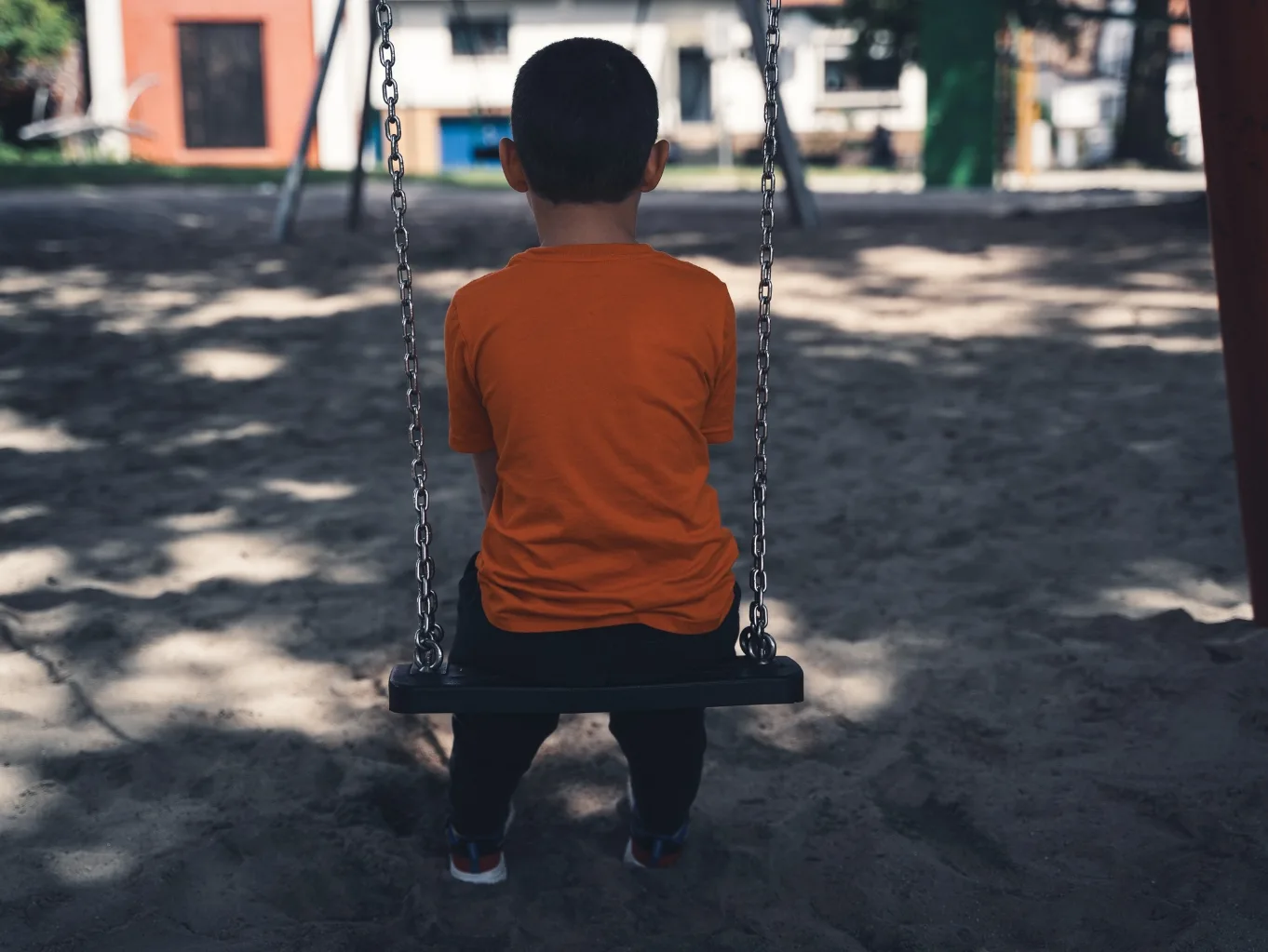
Childhood trauma does not stay in childhood just because time passes. It can shape how the nervous system experiences trust, closeness, conflict, boundaries, and emotional safety in adult relationships.
Why Childhood Trauma Affects Adult Relationships
Relationships are where we first learn safety.
As children, we learn whether people respond when we need help. We learn whether emotions are welcomed, ignored, punished, or used against us. We learn whether closeness feels safe, unpredictable, intrusive, or unavailable.
When childhood includes abuse, neglect, emotional invalidation, household instability, caregiver addiction, violence, chronic criticism, abandonment, or inconsistent care, the nervous system adapts. Those adaptations may help a child survive. But later, they can make adult relationships feel confusing, exhausting, or unsafe.
The CDC defines adverse childhood experiences, or ACEs, as potentially traumatic events that happen in childhood, including violence, abuse, neglect, and growing up in a household with mental health or substance use problems. The CDC also notes that toxic stress from ACEs can affect brain development and the way the body responds to stress.
This is why childhood trauma can show up decades later as relationship patterns:
- Fear of abandonment
- Difficulty trusting others
- People-pleasing
- Emotional shutdown
- Intense conflict reactions
- Avoidance of vulnerability
- Anxiety after closeness
- Choosing unavailable partners
- Feeling responsible for others’ emotions
- Struggling to set boundaries
- Confusing intensity with intimacy
These patterns are not character flaws. They are often protective strategies that formed before you had better options.
“Many adult relationship patterns began as childhood survival strategies. Therapy helps those strategies update to the present.”
Childhood Trauma Is Not Only What Happened — It Is Also What Was Missing
Many people minimize their childhood trauma because they did not experience one single catastrophic event.
They may say:
“My childhood was not that bad.”
“Other people had it worse.”
“My parents did their best.”
“I was never physically hurt.”
“I had food and a home, so I should be fine.”
But childhood trauma can include both acts of harm and chronic emotional absence.
It may include:
- Not being comforted when distressed
- Having to manage a parent’s emotions
- Being criticized for normal needs
- Being ignored when upset
- Growing up around unpredictable moods
- Feeling unsafe to disagree
- Being expected to act older than your age
- Not having privacy, protection, or emotional attunement
- Being praised only for achievement or compliance
Emotional neglect can be especially difficult to name because it is defined by what did not happen. There may be no clear memory to point to. Instead, the adult may carry a body-level belief: “My needs are too much,” “I have to handle everything alone,” or “If I am honest, people will leave.”
Therapy helps people understand these patterns without requiring them to exaggerate or minimize their past. The point is not to blame. The point is to understand how early environments shaped the nervous system’s expectations of love, safety, and connection.
Attachment: The Template for Closeness
Attachment describes the way humans bond, seek safety, and respond to closeness or separation.
When caregivers are generally safe, responsive, and emotionally available, children are more likely to develop secure attachment. They learn: “I can need others and still be safe. I can explore the world and return for support.”
When care is inconsistent, frightening, intrusive, absent, or rejecting, children may develop insecure attachment strategies. These strategies often continue into adult relationships.
Research supports the connection between early adversity and adult attachment patterns. A prospective study examining childhood neglect and physical abuse found that childhood maltreatment had lasting effects on adult attachment styles, and that anxious and avoidant attachment styles contributed to later mental health outcomes including anxiety, depression, and self-esteem.
In adult relationships, attachment patterns may look like:
Anxious attachment
The person may crave closeness but fear abandonment. They may overthink texts, monitor tone, need frequent reassurance, or feel intense panic when a partner seems distant.
The underlying fear is often: “If I am not constantly connected, I may be left.”
Avoidant attachment
The person may value independence and feel overwhelmed by emotional closeness. They may pull away during conflict, minimize needs, avoid vulnerability, or feel trapped when relationships become intimate.
The underlying fear is often: “If I need someone, I may lose myself or be disappointed.”
Disorganized attachment
The person may want closeness and fear it at the same time. Relationships may feel magnetic, confusing, intense, and unsafe. They may move toward connection, then suddenly shut down or push away.
The underlying conflict is often: “The person I want comfort from may also feel like danger.”
Therapy helps identify these patterns with compassion. The goal is not to label yourself permanently. Attachment patterns can change through awareness, corrective relational experiences, nervous system regulation, and repeated practice.
How Childhood Trauma Shows Up in Adult Relationships
Childhood trauma can affect relationships in many ways. The specific pattern depends on the person, the type of trauma, protective factors, culture, temperament, and later life experiences.
Still, several themes are common.
1. Hypervigilance: Constantly Scanning for Danger
If you grew up needing to read the room to stay safe, your nervous system may still scan for subtle signs of threat.
In adult relationships, this can look like:
- Noticing every shift in tone
- Reading facial expressions intensely
- Assuming silence means anger
- Feeling anxious when someone takes time to reply
- Preparing for rejection before it happens
- Feeling unable to relax when things are calm
- Interpreting neutral behavior as danger
Hypervigilance is exhausting because the relationship never feels fully restful. Even when your partner or friend is safe, your body may be preparing for conflict, abandonment, or disappointment.
Therapy helps by teaching the nervous system to distinguish past danger from present cues. The aim is not to ignore intuition. The aim is to stop living as if every small signal is proof of threat.
2. People-Pleasing and Over-Functioning
Children in unpredictable or emotionally unsafe homes often learn to stay connected by being useful, agreeable, impressive, invisible, or easy.
As adults, this may become people-pleasing.
You may:
- Say yes when you mean no
- Apologize when you did nothing wrong
- Manage everyone’s emotions
- Avoid conflict at any cost
- Feel guilty for having needs
- Feel responsible for keeping the relationship stable
- Over-explain boundaries
- Choose partners who need rescuing
People-pleasing is not kindness. It is often a safety strategy.
The body may believe: “If I disappoint someone, I may lose connection.”
Therapy helps people practice boundaries without overwhelming guilt. This usually requires more than learning scripts. It means helping the nervous system tolerate the feeling of being separate, honest, and still safe.
3. Emotional Shutdown During Conflict
Some trauma survivors do not become loud during conflict. They disappear internally.
They may go blank, freeze, become numb, lose words, agree automatically, or feel like they are watching the conversation from far away. Later, they may realize what they wanted to say but could not access it in the moment.
This is not weakness. It may be a freeze or shutdown response.
If childhood conflict felt unsafe, humiliating, or overwhelming, the body may have learned that the safest option is to become still, quiet, or unreachable.
In therapy, clients can learn to recognize early signs of shutdown and create relational pauses:
“I want to keep talking, but I need two minutes to settle.”
“I am getting overwhelmed and losing words.”
“I am not ignoring you. My system is shutting down.”
“I need to come back to this when I can stay present.”
That kind of communication is a skill. It often takes practice, especially if childhood taught you that pausing was not allowed.
4. Fear of Intimacy
Childhood trauma can make closeness feel unsafe.
This may seem confusing because the person may deeply want love, partnership, friendship, or family. But when closeness actually appears, the body may react with fear.
Fear of intimacy may look like:
- Pulling away when someone gets close
- Feeling irritated after emotional vulnerability
- Choosing unavailable people
- Ending relationships when they become stable
- Feeling trapped by commitment
- Feeling exposed when cared for
- Distrusting kindness
- Needing distance after connection
If care was inconsistent, intrusive, conditional, or unsafe in childhood, adult intimacy may activate old protective responses.
Therapy helps by slowing intimacy down. The work is not to force vulnerability. The work is to build enough safety that closeness becomes tolerable in small, real doses.
5. Confusing Intensity With Love
For some people, calm relationships feel unfamiliar. If childhood love was mixed with chaos, fear, unpredictability, or emotional highs and lows, the nervous system may mistake intensity for chemistry.
This can lead to cycles of attraction to relationships that feel exciting but unstable.
The person may feel bored with safe partners and drawn to unavailable or volatile ones. They may intellectually know a relationship is unhealthy but feel strongly pulled toward it.
This is not because they “want drama.” It may be because the nervous system recognizes intensity as familiar.
Therapy helps separate familiarity from safety. Over time, clients may learn that love does not need to feel like pursuit, panic, rescue, or emotional survival.
6. Difficulty Receiving Care
People with childhood trauma may be excellent at caring for others and deeply uncomfortable receiving care themselves.
Receiving support can bring up:
- Shame
- Suspicion
- Guilt
- Fear of owing something
- Fear of being controlled
- Fear of being disappointed
- The belief that needs make them weak
If support was unreliable or conditional growing up, depending on someone may feel dangerous.
Therapy provides a place to practice receiving without performance. A therapist’s consistent, boundaried presence can become a corrective experience: support that does not require you to earn it by being perfect, useful, or easy.
Trauma, the Body, and Relationship Triggers
Relationship triggers are often body-first.
A partner sighs, and your stomach drops.
A friend cancels plans, and your chest tightens.
Someone raises their voice, and your mind goes blank.
A loved one asks for space, and panic floods your body.
The reaction may feel disproportionate to the present moment because the nervous system is responding to a threat template built earlier in life.
The CDC notes that toxic stress from adverse childhood experiences can affect how the body responds to stress. In adult relationships, this can mean the body reacts before the thinking mind can evaluate the situation accurately.
This is why trauma therapy often needs to include body-based regulation, not only insight. Insight may explain why you react, but regulation helps your body experience something new.
How Therapy Helps Childhood Trauma in Adult Relationships
Therapy does not erase the past. It helps the past stop organizing the present.
Effective trauma therapy may include several layers: understanding patterns, regulating the nervous system, processing traumatic memories, working with protective parts, practicing boundaries, and building new relational experiences.
At Embodied Integrations, Trauma Therapy focuses on helping clients heal from painful experiences through an integrative, body-aware, trauma-informed approach.
1. Therapy Helps You Name the Pattern Without Shame
Many people come to therapy believing they are “too needy,” “too distant,” “too sensitive,” “bad at relationships,” or “broken.”
A trauma-informed therapist helps reframe these patterns as adaptations.
Instead of:
“I ruin relationships.”
The work becomes:
“My nervous system learned protection strategies that made sense in the past. Now I can learn new ones.”
This shift reduces shame and creates room for responsibility. You are not blamed for what happened to you, but you are supported in changing what is now hurting you.
2. Therapy Builds Nervous System Regulation
Before deep relational change is possible, the body often needs more capacity.
Therapy may help you notice:
- When anxiety begins
- When shutdown starts
- What conflict feels like in the body
- What safety feels like
- What happens when someone gets close
- What happens when you express a need
- What helps you return to the present
Regulation tools may include grounding, breath, orienting, movement, somatic tracking, parts work, or pacing difficult conversations.
The goal is not to stay calm all the time. The goal is to recover faster and remain more connected to yourself during relational stress.
3. Therapy Helps Process What Is Still “Present”
Some relationship reactions are linked to unresolved traumatic memories or emotional learning.
For example:
- Criticism may activate childhood shame.
- Silence may activate abandonment fear.
- Conflict may activate memories of danger.
- Care may activate distrust.
- Boundaries may activate fear of punishment.
Trauma therapy can help process these associations so the body no longer responds as if the old experience is happening again.
Depending on the therapist’s training, this may include EMDR, somatic therapy, Brainspotting, parts work, attachment-focused therapy, or other trauma-informed approaches.
The method matters, but the pacing matters more. Trauma processing should not overwhelm the client. It should help the nervous system metabolize what has remained stuck.
4. Therapy Works With Protective Parts
Many relationship patterns are protective.
The part that pulls away may be protecting you from engulfment.
The part that people-pleases may be protecting you from rejection.
The part that becomes critical may be protecting you from vulnerability.
The part that chooses unavailable people may be protecting you from the risk of being truly known.
Therapy helps these protective parts become less extreme by understanding what they fear and what they need.
Instead of fighting yourself, you learn to build internal trust.
This can make relationships less reactive because your inner system is no longer at war.
5. Therapy Helps Rebuild Boundaries
Childhood trauma often damages boundaries.
Some people learned that their “no” did not matter. Others learned that having needs caused conflict. Some learned to merge with others emotionally. Others learned to need no one.
Therapy helps rebuild boundaries from the inside out.
Healthy boundaries are not walls. They are clear lines that allow connection without self-abandonment.
In practice, this may mean learning to say:
- “I need time to think before answering.”
- “I care about you, but I cannot take responsibility for that.”
- “I am not available for this conversation when voices are raised.”
- “I want closeness, and I also need space.”
- “No, that does not work for me.”
For trauma survivors, boundary-setting may initially feel dangerous. Therapy helps the body learn that honesty and connection can coexist.
6. Therapy Creates a Corrective Relational Experience
Therapy is not only a place to talk about relationships. It is a relationship.
A skilled therapist offers consistency, attunement, consent, repair, boundaries, and emotional presence. Over time, this can help the nervous system experience a different kind of connection.
The client may learn:
- I can be honest and not be punished.
- I can have needs and not be rejected.
- I can disagree and still be safe.
- I can feel emotions without being too much.
- I can be seen without losing control.
- I can repair after rupture.
These experiences matter because relationship trauma often heals through safe relationship, not through insight alone.
What Progress Can Look Like
Progress in trauma therapy is often subtle before it becomes obvious.
You may notice:
- You pause before reacting.
- You recognize when a trigger belongs partly to the past.
- You recover faster after conflict.
- You ask for reassurance less urgently.
- You set boundaries with less guilt.
- You tolerate closeness more steadily.
- You choose safer people.
- You stop over-explaining your needs.
- You feel less responsible for others’ emotions.
- You can repair instead of withdraw or escalate.
- You feel more like yourself in relationships.
The goal is not to become perfectly secure overnight. The goal is to build more choice where there used to be automatic protection.
Can Adult Relationships Heal After Childhood Trauma?
Yes, but healing is usually gradual.
The past influences relationship patterns, but it does not permanently define them. Research on ACEs and adult outcomes shows real risk, but risk is not destiny. The CDC emphasizes that ACEs are linked to later health and mental health outcomes, while also focusing on prevention, resilience, and supportive conditions.
Healing often requires:
- Safe relationships
- Nervous system regulation
- Trauma processing
- Boundaries
- Self-compassion
- Honest communication
- Repeated corrective experiences
- Time
A person does not need to become someone else to have healthier relationships. They need enough safety to stop living from old survival strategies.
Final Thought
Childhood trauma can shape adult relationships by changing how the nervous system experiences closeness, trust, conflict, boundaries, and emotional safety. It can make love feel dangerous, distance feel safer, or intensity feel familiar.
But these patterns are not fixed.
Therapy helps by making the invisible visible. It helps you understand your protective responses, regulate your body, process unresolved pain, build boundaries, and experience connection in a new way.
Healing does not mean blaming your childhood for everything. It means recognizing where the past is still speaking — and learning how to respond from the present.

Working with a somatic therapist in Denver
I’m Dennis Guyvan, MA, LPCC — a somatic therapist and founder of Embodied Integrations. If what you just read resonates with you, Trauma therapy in Denver may help you move from understanding your patterns to actually changing them. Sessions are available in person in Denver and online anywhere in Colorado.


