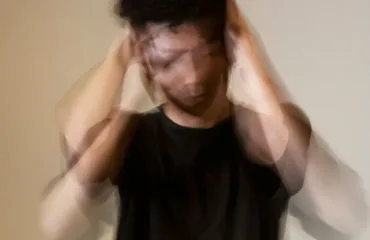

A racing heart before a deadline, restless thoughts at night, and tension that will not leave your shoulders can all feel like signs of the same problem. Stress and anxiety do overlap, but they are not identical. Recognizing what is happening can make an overwhelming experience feel more understandable and clarify when additional support may be helpful.
The main difference between stress and anxiety is usually the source and duration of the response. Stress tends to arise from an identifiable demand or situation. Anxiety may continue after the immediate problem has passed, occur without a clear threat, or feel disproportionate to what is happening.
Understanding Stress as a Response to Pressure
Stress is the mind and body’s response to a demand, change, or perceived challenge. The source may be obvious, such as a work deadline, financial difficulty, conflict, illness, or major life transition. Even positive events, including moving or beginning a new job, can activate a stress response.
Short-term stress is not always harmful. It can increase alertness and provide the energy needed to respond to a difficult situation. When the pressure ends, the nervous system generally begins to settle. A person worried about an upcoming presentation, for example, may feel noticeably calmer once it is finished.
Stress can become more difficult when the source continues for weeks or months. Ongoing caregiving responsibilities, an unstable workplace, relationship problems, or repeated uncertainty may leave the body with too little time to recover. This can lead to irritability, fatigue, headaches, digestive discomfort, muscle tension, sleep disruption, and difficulty concentrating.
What Makes Anxiety Different?
Anxiety is a state of worry, fear, or apprehension that may persist even when there is no immediate danger. It can begin as a response to genuine stress, but the feeling of alarm does not always disappear when the stressor is resolved.
For example, stress may involve thinking, “I have too much work to finish this week.” Anxiety may sound more like, “Something will go wrong, I will not cope, and I cannot stop thinking about it,” even after the workload becomes manageable.
Anxiety may also appear without an obvious explanation. A person can wake up with a sense of dread, feel physically unsafe in an ordinary situation, or repeatedly anticipate a negative outcome despite having little evidence that it will occur. According to the National Institute of Mental Health, occasional anxiety is a normal part of life, while anxiety disorders involve more than temporary worry and can interfere with work, relationships, and routine activities.
The Difference Between Stress and Anxiety in Daily Life
Stress and anxiety can produce many of the same physical and emotional sensations. Both may involve a rapid heartbeat, shallow breathing, sweating, uneasiness, racing thoughts, reduced patience, headaches, and trouble sleeping. The symptoms alone do not always provide a clear answer.
A more useful distinction comes from examining the pattern:
- Stress usually has an identifiable cause. Anxiety may feel disconnected from a current problem or continue after that problem ends.
- Stress often decreases when circumstances improve. Anxiety can remain present even in safe or relatively calm situations.
- Stress is commonly focused on a specific demand. Anxiety may spread across several areas of life or shift from one concern to another.
- Stress may motivate action. Anxiety is more likely to create avoidance, paralysis, or repeated attempts to obtain reassurance.
- Stress is often proportional to the situation. Anxiety may feel much more intense than the actual level of danger.
These distinctions are helpful, but they are not absolute. Chronic stress can contribute to anxiety, and anxiety can make ordinary demands feel more stressful. A person may also experience both at the same time.
How Stress and Anxiety Show Up in the Body
The difference between stress and anxiety is not limited to thought patterns. Both involve the nervous system and can be experienced throughout the body.
When the brain perceives a threat or demand, the body may prepare to fight, flee, freeze, or protect itself in another way. Breathing changes, muscles tighten, and attention narrows toward possible danger. This response is useful when action is required, but it becomes exhausting when the body remains on high alert.
Stress may feel like pressure in the head, jaw tension, tight shoulders, a churning stomach, or fatigue after a demanding day. Anxiety may include similar sensations, along with persistent restlessness, chest tightness, trembling, dizziness, nausea, or a sense that something bad is about to happen.
Physical symptoms should not automatically be attributed to anxiety. New, severe, or unexplained symptoms may require medical evaluation, especially chest pain, fainting, significant breathing difficulty, or sudden changes in functioning.
Can Stress Turn Into Anxiety?
Yes, prolonged or poorly resolved stress can contribute to ongoing anxiety. If the nervous system repeatedly encounters pressure without enough recovery, it may become more reactive. Eventually, the body can begin responding as though danger is present even during neutral moments.
This does not mean everyone under chronic stress will develop an anxiety disorder. Personal history, health, environment, previous trauma, support systems, and biological factors can all influence how someone responds. Still, persistent stress is worth taking seriously before exhaustion and hypervigilance become a person’s normal state.
Does Anxiety Always Mean an Anxiety Disorder?
No. Anxiety is a natural human response, and feeling anxious before an interview, medical appointment, or difficult conversation does not necessarily indicate a disorder.
The more important questions are how long the anxiety lasts, how intense it becomes, and how much it interferes with daily life. Professional assessment may be appropriate when worry feels uncontrollable, remains present for an extended period, disrupts sleep, affects relationships or work, causes repeated avoidance, or produces frequent panic-like symptoms.
The NIMH guide to stress and anxiety similarly notes that persistent symptoms, avoidance, and interference with everyday life are signs that more support may be needed. Only a qualified health professional can diagnose an anxiety disorder.
Why Calming Down Is Not Always Simple
People experiencing anxiety are often told to relax, think positively, or stop worrying. These suggestions can overlook the fact that anxiety is both psychological and physical. A nervous system that perceives danger cannot always return to calm through reasoning alone.
This helps explain why someone may understand intellectually that a situation is safe while still experiencing a racing heart, tense muscles, or an urge to escape. The response is not a personal failure. It may reflect a protective pattern that has become overactive or remained in place after prolonged stress or difficult experiences.
Grounding, regular sleep, movement, reduced caffeine intake, supportive relationships, and breathing practices may help some people manage mild symptoms. However, coping strategies are not substitutes for individualized care when anxiety is persistent or significantly disruptive.
When Therapy Can Help Clarify the Pattern
Therapy can provide space to examine triggers, bodily responses, avoidance patterns, and the experiences that may be keeping the nervous system on alert. It can also help distinguish situational stress from a broader pattern of anxiety without reducing the person’s experience to a label.
At Embodied Integrations, anxiety therapy in Denver and online across Colorado includes attention to both emotional experience and nervous system responses. The clinic’s somatic approach may involve noticing physical sensations, safely processing underlying emotions, and developing greater flexibility in moving from alarm toward calm and connection.
Seeking therapy does not require waiting until symptoms become unbearable. Support may be useful when stress keeps returning in the same form, anxiety begins shaping important decisions, or self-guided efforts provide only temporary relief.
Recognizing What Your Experience Is Telling You
So, how can someone tell whether it is stress or anxiety? A useful starting point is to ask whether there is a clear external pressure, whether the response settles when that pressure ends, and whether fear remains active in situations that are currently safe.
Stress often says, “There is too much happening right now.” Anxiety often says, “Something is wrong or could go wrong, and I cannot switch off the alarm.” Both experiences deserve attention, particularly when they affect sleep, health, relationships, or the ability to participate fully in daily life.
Understanding the difference between stress and anxiety is not about choosing the perfect label. It is about recognizing the pattern with greater accuracy, responding with compassion, and identifying the kind of support that fits what the mind and body are experiencing.

Working with a somatic therapist in Denver
I’m Dennis Guyvan, MA, LPCC — a somatic therapist and founder of Embodied Integrations. If what you just read resonates with you, Anxiety therapy in Denver may help you move from understanding your patterns to actually changing them. Sessions are available in person in Denver and online anywhere in Colorado.